
Guides
How to Mix Coco Coir and Perlite
Drainage substrate recipes with coco, perlite, vermiculite, and clay based on the crop.
The 70/30 recipe of coco and perlite is the starting point. It hardens or softens depending on whether you water daily or leave for the weekend.
Recipes
Tomato and pepper in pots: 60% coco, 25% perlite, 15% vermiculite. Indoor (monstera, pothos): 50% coco, 30% perlite, 20% clay at the bottom. Seedling tray: 80% fine coco, 20% perlite, no clay.
Hydrate the coco beforehand. Mix in a tarp or large basin until uniform color. The perlite rises: do not blow; dampen a bit so it doesn't fly away.
Fertilization
Coco does not provide nutrients. Start fertilizing at the first watering after transplanting with a mild NPK. If reusing the mix, sift out roots and add 20% new perlite: coco breaks down and loses air.
Signs the mix is failing
Puddle 10 minutes after watering: lack of perlite or drainage. Plant asking for water every 12 hours in 25 L: excess perlite or small pot. Yellow leaves with wet substrate: suffocation, not yet a lack of iron.
What We Recommend at Control Garden
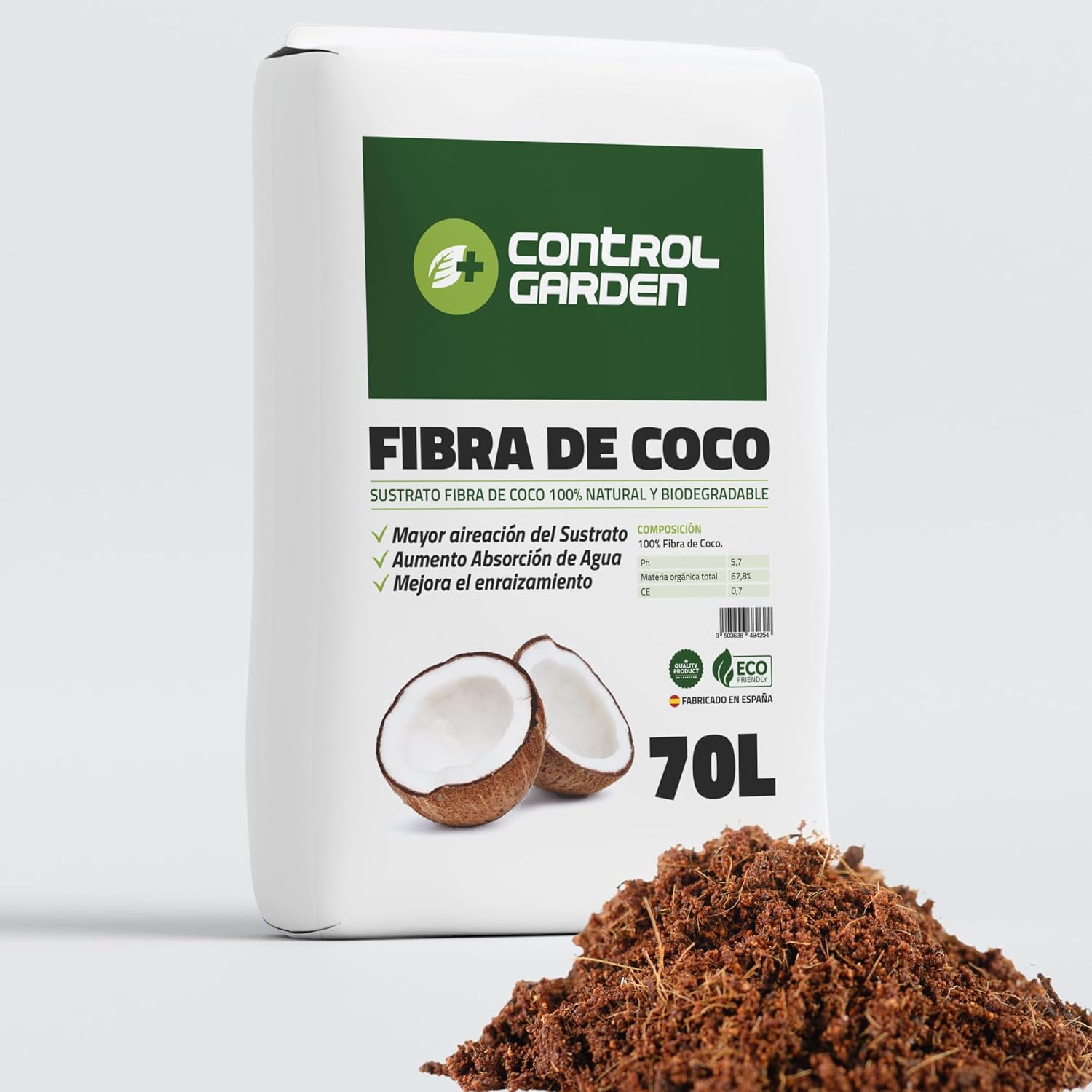
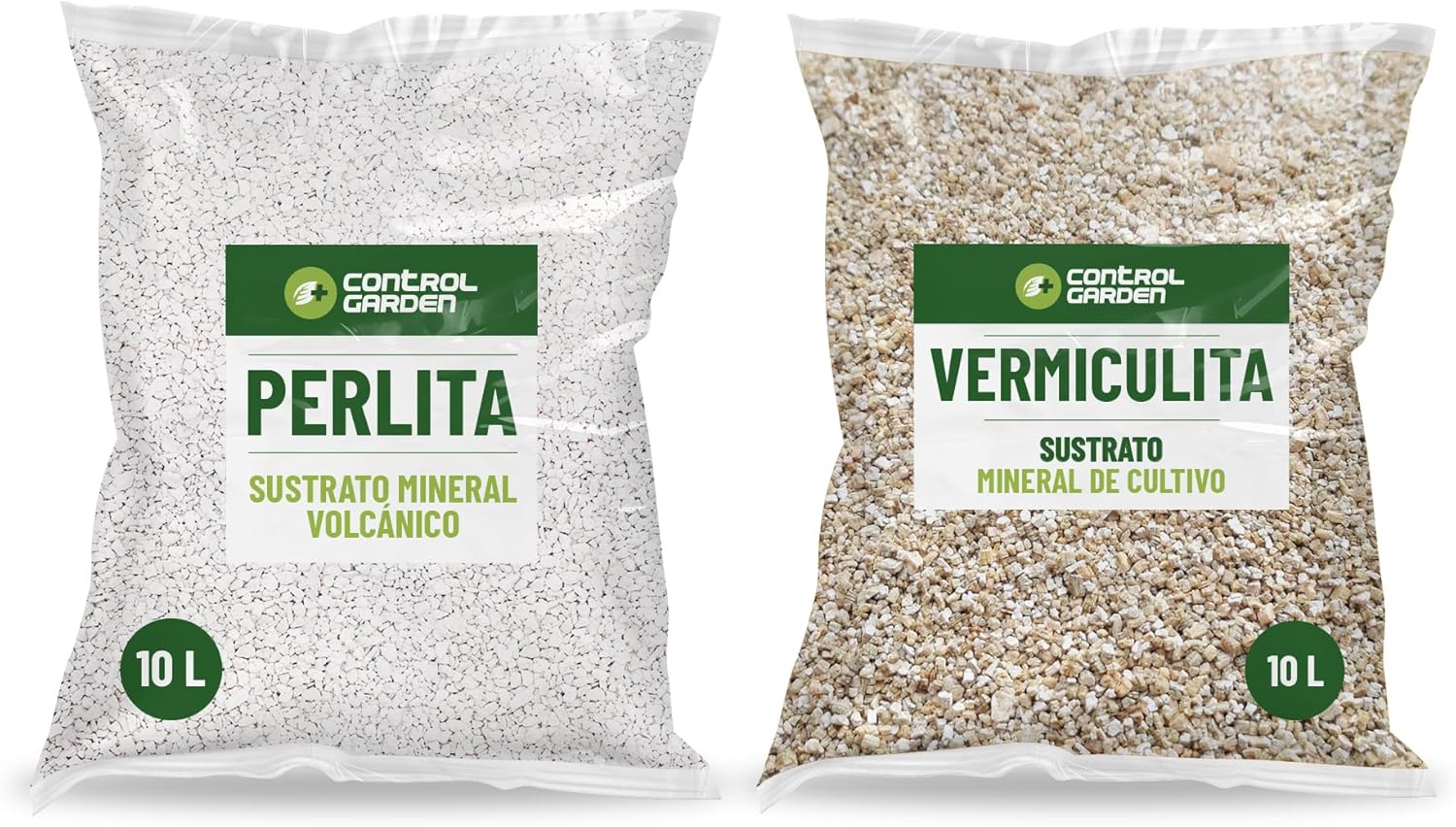
Packs of clay + perlite + vermiculite and coco in 11 L or 70 L. You mix it all at once and forget about buying three separate bags by eye.
Recommended products
View catalogue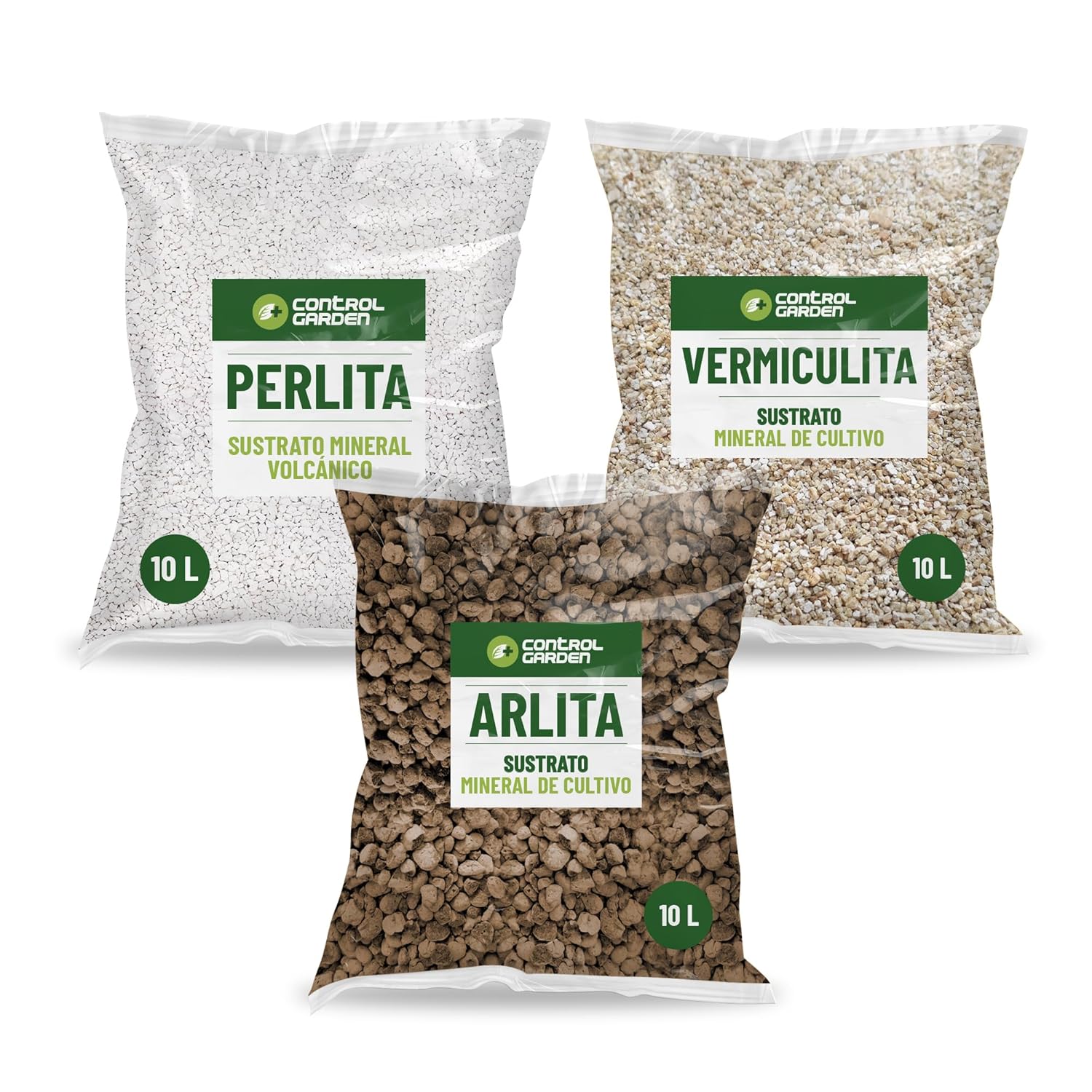 -15%
-15%
Arlita 10L + Perlite 10L + Vermiculite 10L Pack · Substrate for Indoor and Outdoor Plants
Volume discount from 2 units
 -15%
-15%
Coconut Fiber Substrate 70 L 100% Natural · Pack 1 unit
Volume discount from 2 units
 -15%
-15%
Perlite 10L and Vermiculite 10L Pack · Substrate for Indoor and Outdoor Plants
Volume discount from 2 units
FAQs
Can I use only coco?
Does vermiculite replace perlite?
Is sterilization necessary?
Keep reading
All universesCoconut Fiber or Universal Soil: Which to Choose
Compare coconut fiber and universal soil for pots, lightweight hydroponics, and urban gardens.
Perlite
Expanded volcanic rock that aerates the substrate and prevents compact root balls.
Drainage substrate for pots
The solution to yellow swamp leaves is air in the root ball, no more fertilizer.
Vermiculite
Expanded mineral that retains water and cations. Ideal for overly dry terraces.
Seedling Tray
Container and technique for germinating with moisture control and separated roots.
Monstera
Tropical interior: filtered light, coco-perlite, and a stake when it starts to climb.