
Guides
How to Use Hydrogel in the Garden and on the Terrace
Protocol for incorporating hydrogel without suffocating roots or inflating the root ball.
Hydrogel is incorporated when planting, not sprinkled on top like salt. This guide covers raised beds and pots, which are not watered the same way.
Preparation
Hydrate in a bucket until it becomes transparent gel. Drain. Mix with the substrate in the root zone (the first 15-20 cm), not in an impermeable layer under the roots.
Recommended Dosage
Pot 20 L: one cup of well-distributed hydrated gel. Raised bed: according to the sheet per m², mixed with the planting soil. Tomatoes: yes. Lavender and garlic: no. Seedlings: no.
Subsequent Watering
The first watering settles it in. The following ones should be spaced out. If you see the gel coming out through the drainage holes, you overdid it: add dry substrate and perlite on top and mix carefully.
What We Recommend at Control Garden
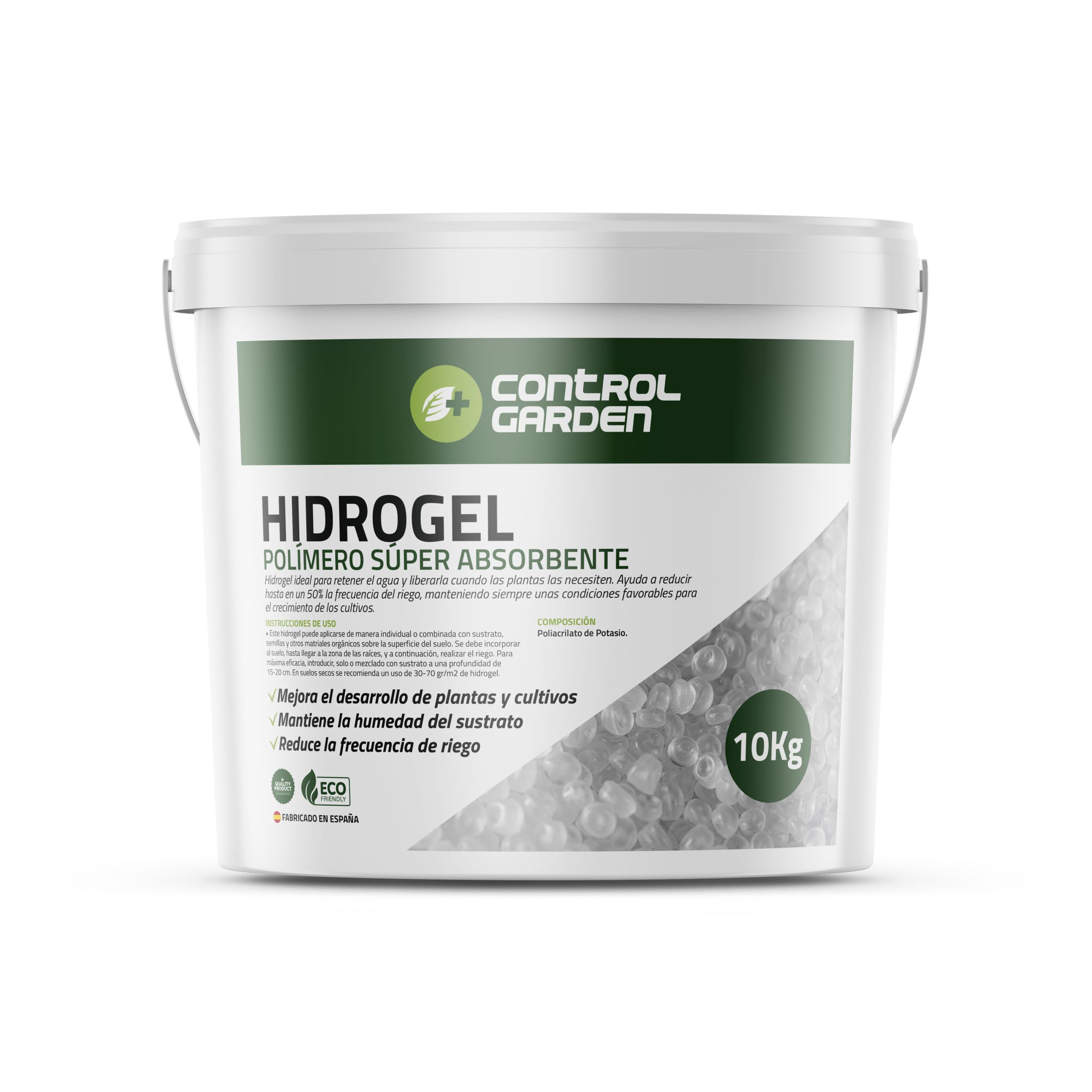
Hydrogel in 1, 5, and 10 kg. For a balcony, 1 kg lasts the whole season. For several raised beds, the 5 or 10 kg bag is more economical.
Recommended products
View catalogue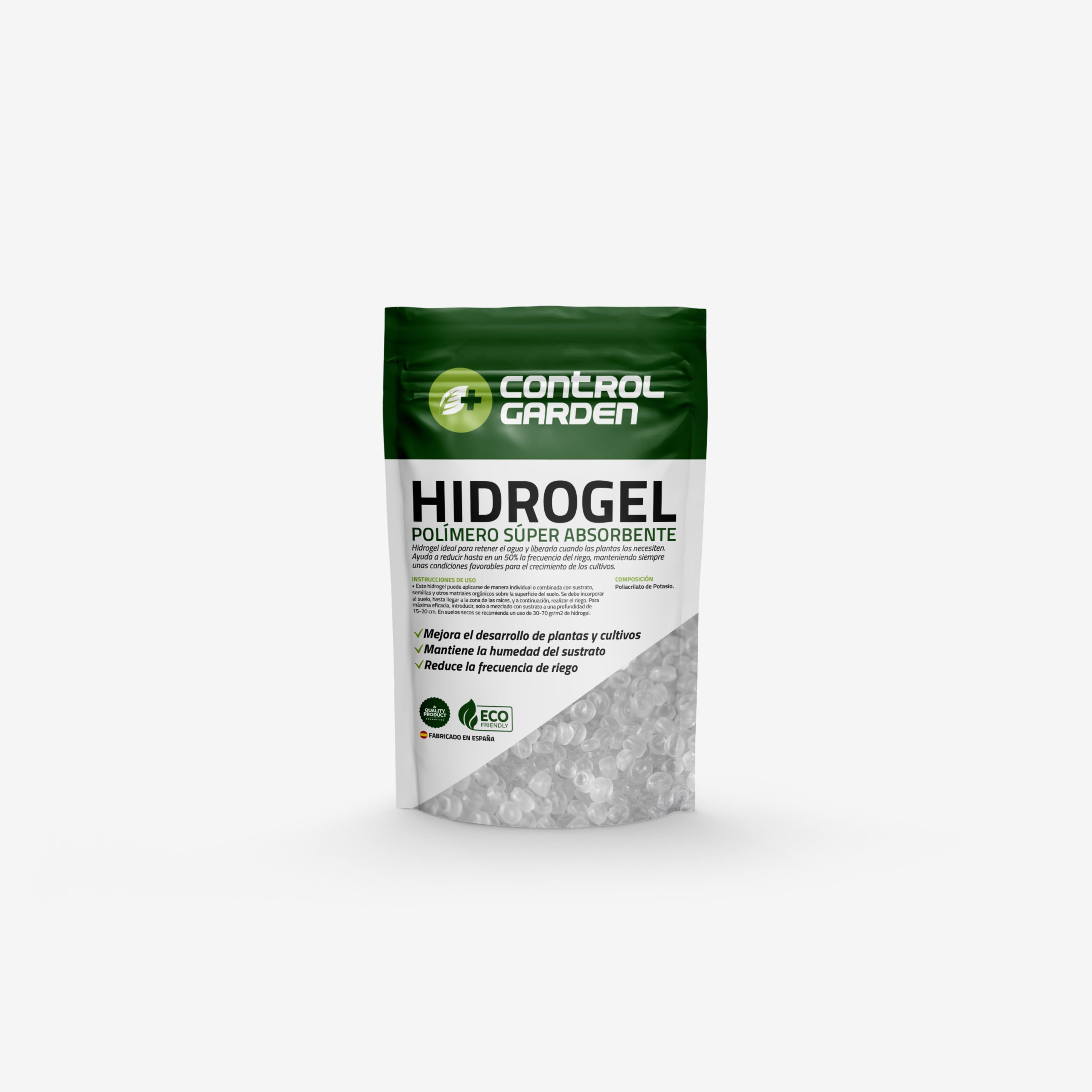
FAQs
Should it be added every year?
Is it suitable for clay soil?
Can it be used with weed control fabric?
Keep reading
All universesHydrogel in Pots: When It Helps and When It Rotts Roots
Hydrogel doesn't replace watering: it spaces it out. Mixed poorly, it suffocates roots.
Hydrogel for Drought in Pots
Space out watering for tomatoes, geraniums, and sun planters. Not for cacti or seedlings.
Agricultural Hydrogel
Polymer that stores irrigation water and releases it to the roots when the substrate dries.
Seedling Tray
Container and technique for germinating with moisture control and separated roots.