
Blog
Hydrogel in Pots: When It Helps and When It Rots
Hydrogel doesn't replace watering: it spaces it out. Mixed poorly, it suffocates roots.
Hydrogel is a polymer that absorbs water and releases it when the substrate dries. In an attic in August, it's gold. In a shady patio in November, it's a trap for rotten roots.
How to Mix It
Hydrate it first in a basin. The dry granules next to the root swell and push the root ball against the pot wall. Mix the already expanded gel with coconut, perlite, or soil, never in a single bag at the bottom.
Typical dosage: a few grams of dry gel per liter of substrate, according to the label. More is not better: the plant “floats” in gel and does not seek soil.
Crops That Appreciate It
Tomato in 25 L, pepper, geranium in the sun, strawberry planters. Less sense in cacti, lavender, and rosemary: they want to dry out between waterings. In seedbeds, avoid it: excess water is the first mold.
Watering After the Gel
Space out waterings and check the weight of the pot. The surface substrate may appear dry while the gel below remains saturated. A toothpick or finger at 5 cm prevents drowning.
What We Recommend at Control Garden
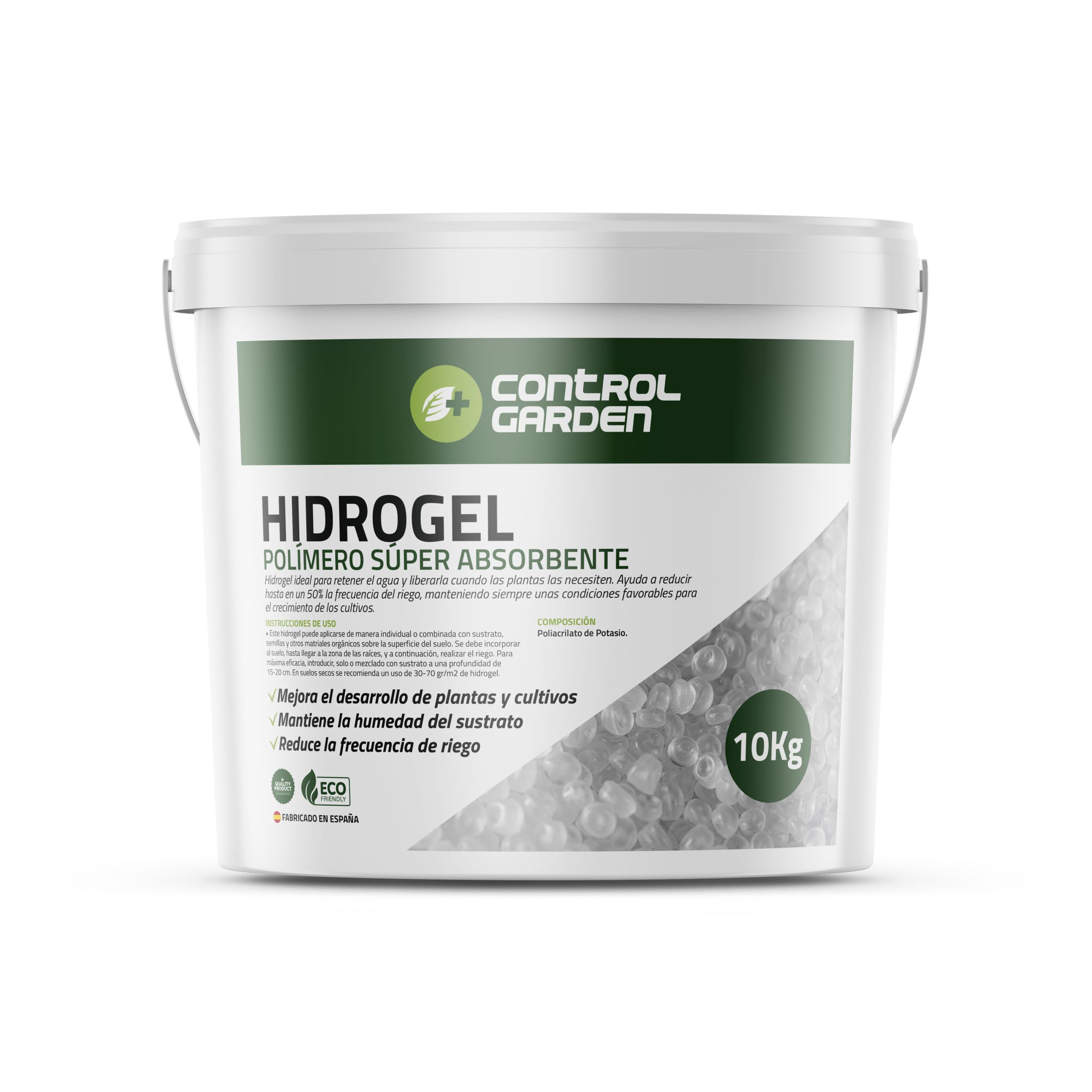
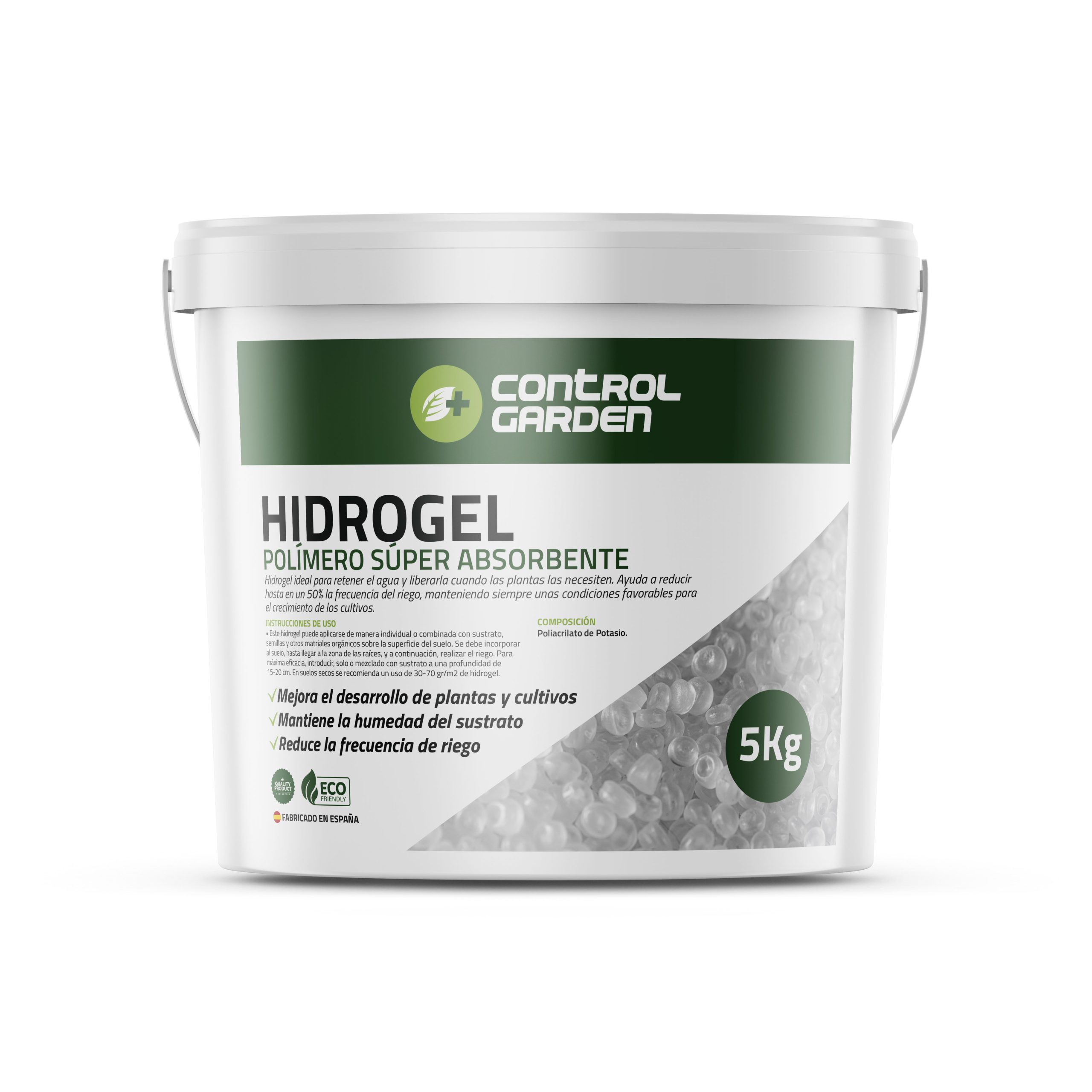
Water-retaining hydrogel in 1 kg, 5 kg, and 10 kg. Start with the small format, measure the effect in 2-3 pots, and then scale up.
Recommended products
View catalogue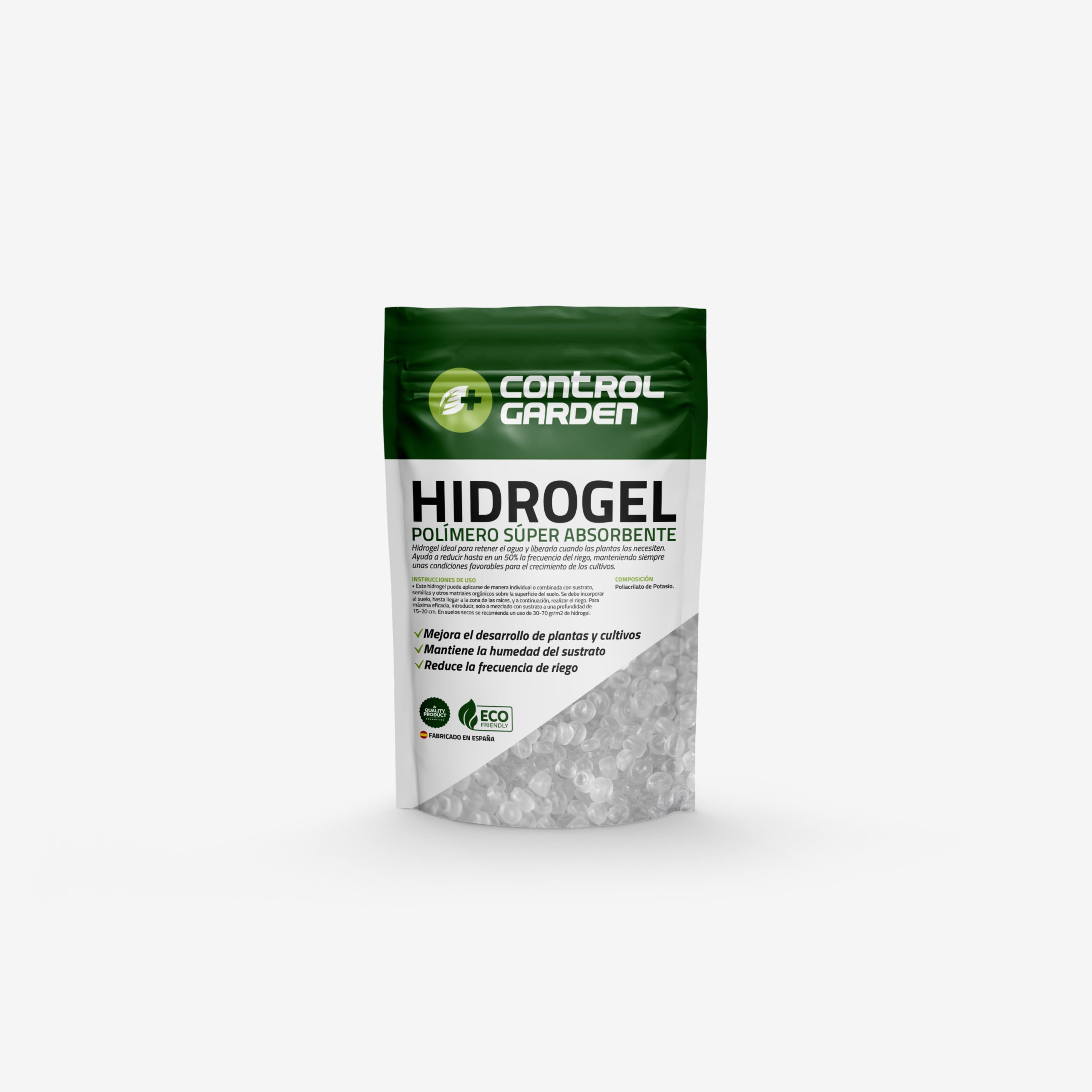
FAQs
Is it the same gel as decorative balls?
Does it last the whole season?
Does it contaminate?
Keep reading
All universesHow to Use Hydrogel in the Garden and on the Terrace
Protocol for incorporating hydrogel without suffocating roots or inflating the root ball.
Hydrogel for Drought in Pots
Space out watering for tomatoes, geraniums, and sun planters. Not for cacti or seedlings.
Can I use hydrogel with tomatoes?
Terrace tomatoes are the star use case. Dosage and mixing are key.
Seedling Tray
Container and technique for germinating with moisture control and separated roots.