
Blog
What Pool Test Strips Measure
Guide to interpreting 3-in-1 and 7-in-1 strips without blindly dosing pool pH.
Green water is rarely just a "lack of chlorine." There is almost always an out-of-range pH that renders the disinfectant ineffective. Test strips are not a laboratory whim: they are the only quick way to avoid wasting product.
Important Parameters
pH (7.2-7.6): above this, chlorine is ineffective; below this, it irritates eyes and corrodes metal. Free chlorine: the one that disinfects now. Bromine, if you use bromine. Total alkalinity: the buffer that prevents pH fluctuations. Cyanuric acid: the stabilizer that, in excess, blocks chlorine.
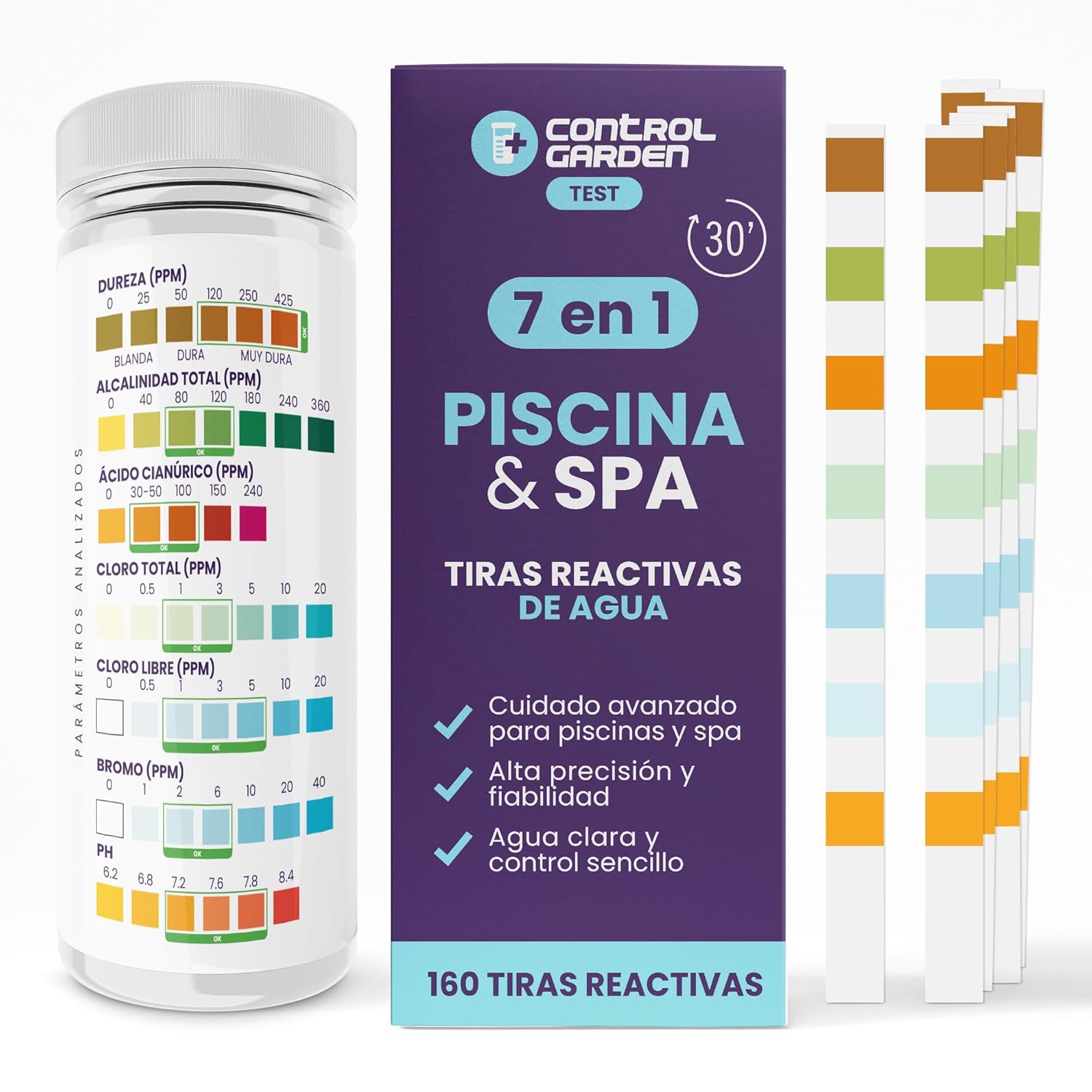
The 3-in-1 strips cover pH, bromine/chlorine, and alkalinity. The 7-in-1 add hardness, cyanuric, and sometimes total chlorine. For a spa or small pool, 3-in-1 is sufficient if you are consistent.
How to Measure Correctly
Submerge for 1-2 seconds with your elbow submerged, not just the surface. Do not shake like a thermometer. Compare at 15-30 seconds in daylight, not under warm LED light. Wet or expired strips lie: seal them and do not leave them in the sun.
What to Do with the Result
First, correct the pH, then the disinfectant. If the pH is at 8.1, adding bleach is pointless. Use a reducer or increaser as needed, wait for recirculation, and measure again. Green water with high pH and "correct" chlorine on the strip indicates combined chlorine: you need to oxygenate or shock chlorinate when the pH is back in range.
What We Recommend at Control Garden
3-in-1 and 7-in-1 strips, plus pH+ and pH− in granulated or liquid form, to measure and correct on the same day.
Recommended products
View catalogue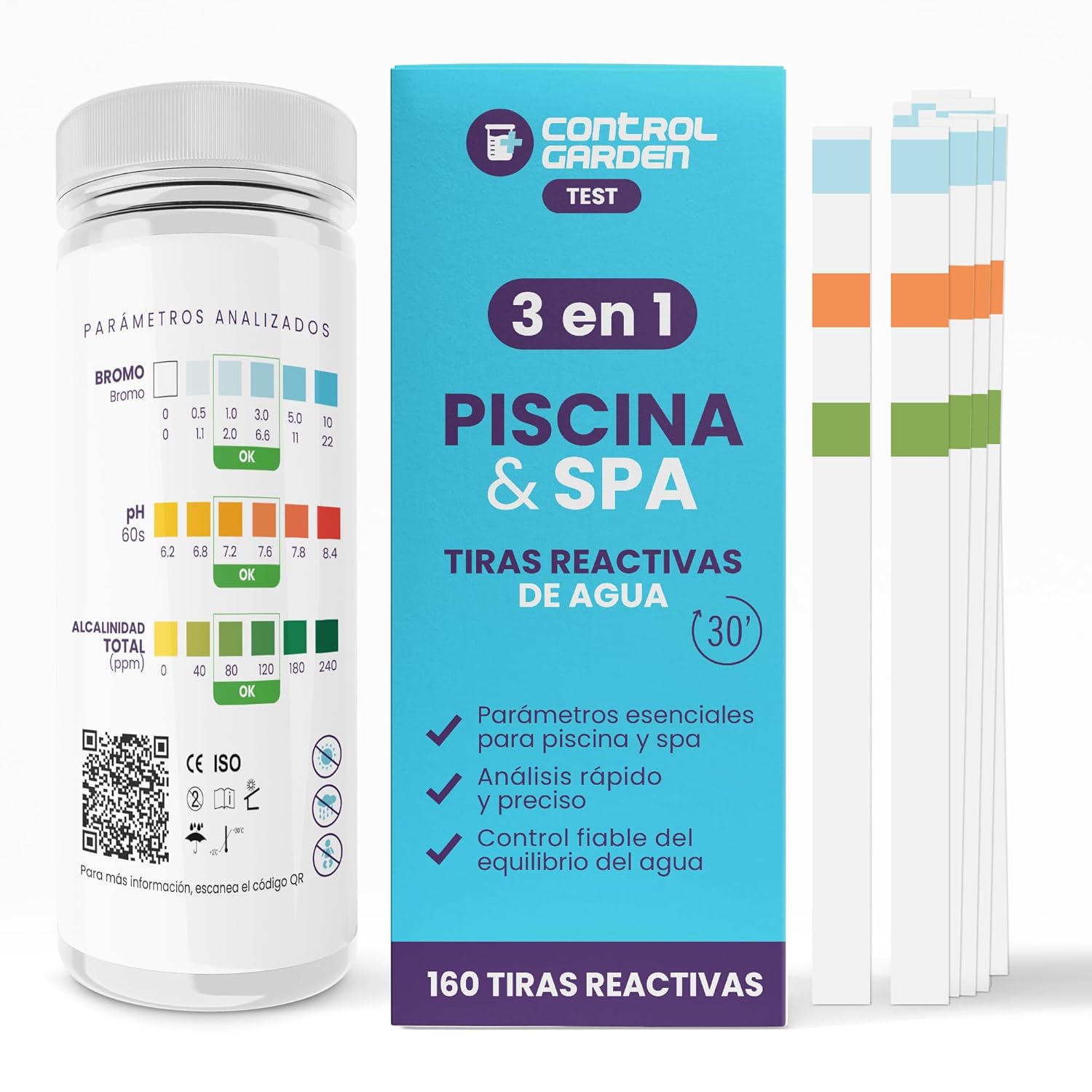 -15%
-15%
3 in 1 Test Strips for pH, Bromine, and Total Alkalinity · Pack of 50
Volume discount from 2 units
 -15%
-15%
7 in 1 pH Test Strips for Pools and Spas · Pack of 30 · pH, Chlorine Analysis and More
Volume discount from 2 units
 -15%
-15%
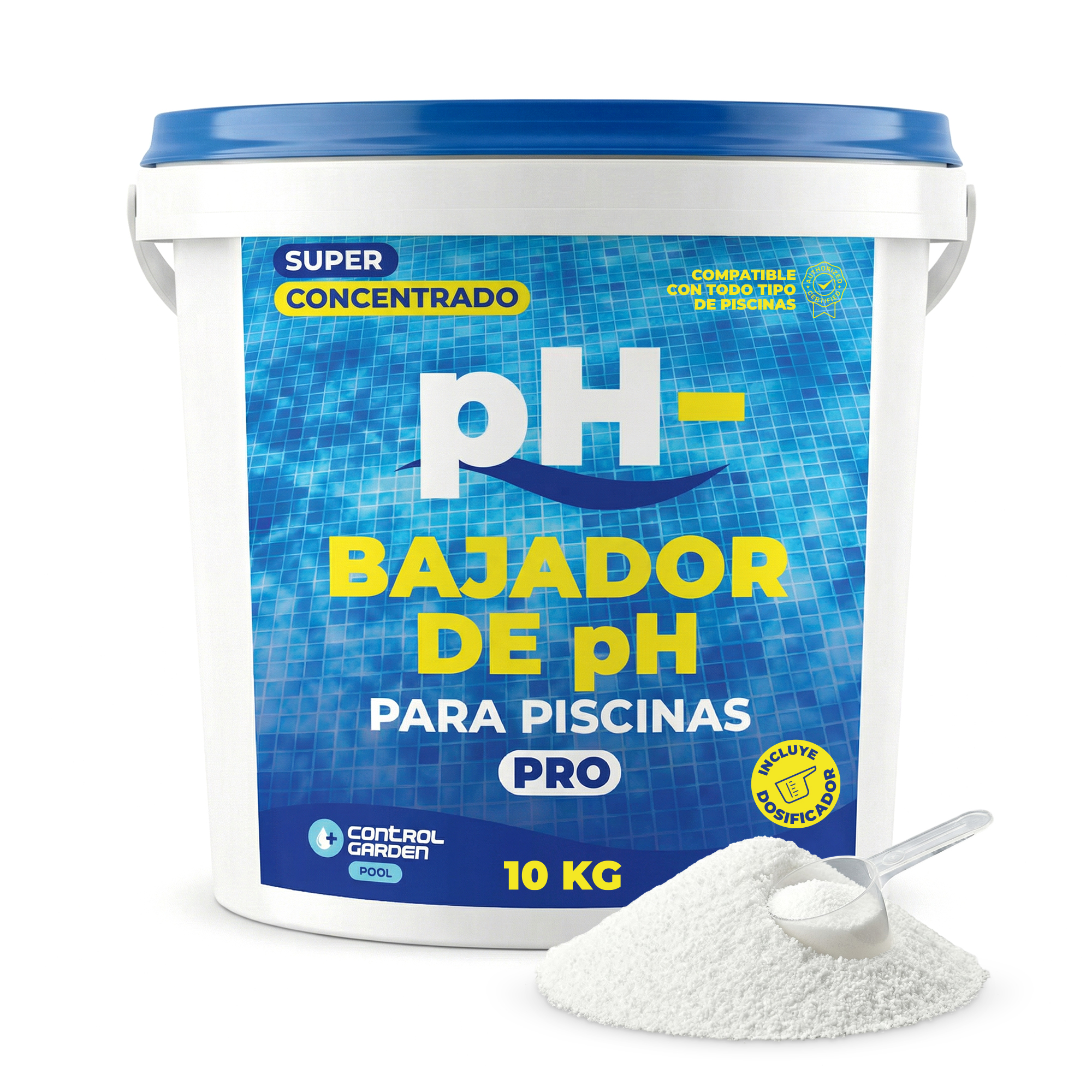
pH Reducer for Pools 10 kg · Solid · Pack 1 unit
Volume discount from 2 units
 -15%
-15%
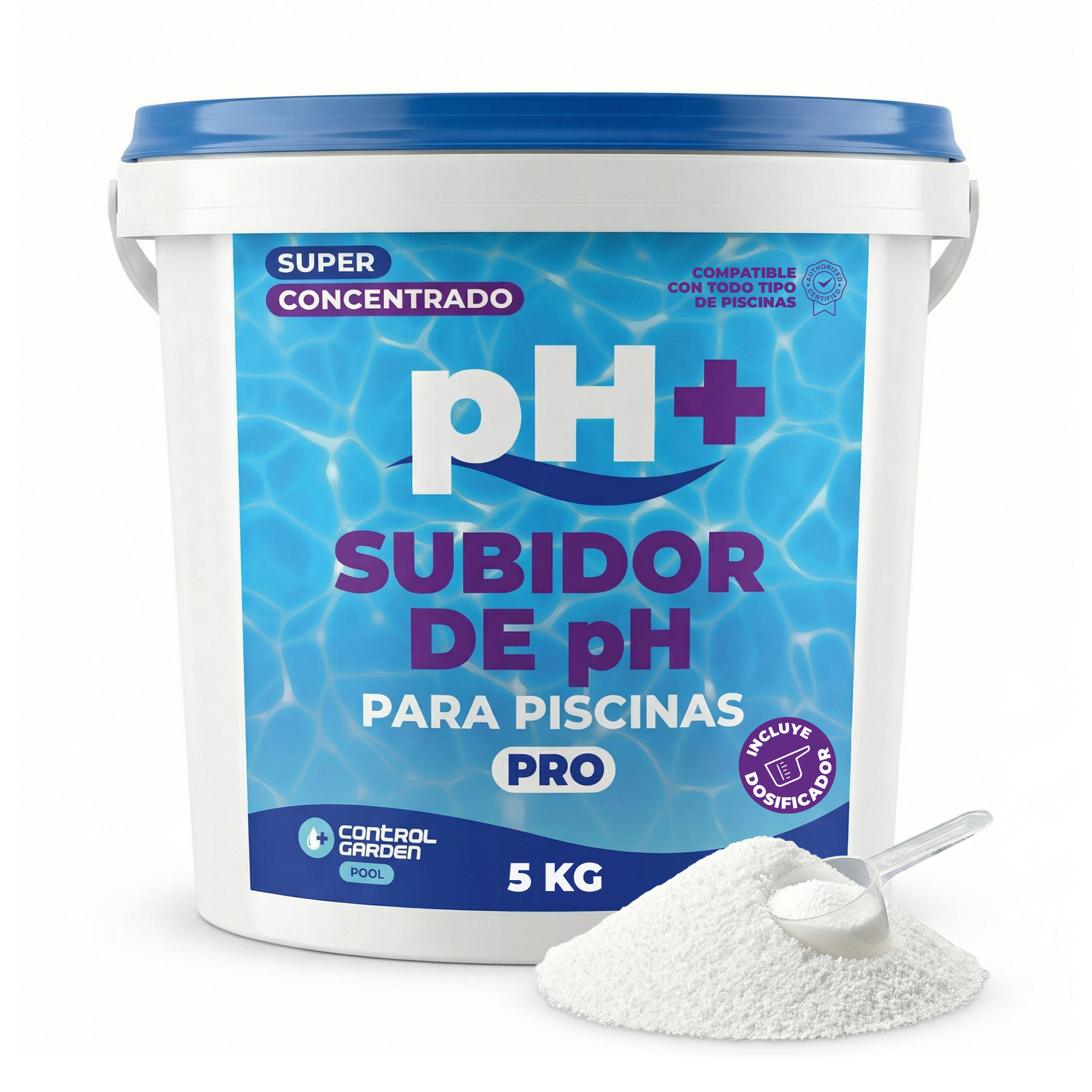
pH+ Granules for Pools 5 kg · Solid pH Increaser
Volume discount from 2 units
FAQs
How often should I measure?
Can aquarium strips be used for pools?
Why is chlorine high and there are algae?
Keep reading
All universesHow to Measure Pool pH with Strips
From strip to dosage: measure accurately and adjust pH before adding chlorine.
Pool pH Control
The solution to green water starts with pH, not blindly adding more disinfectant.
Green Water in the Pool and pH?
Adjust pH, filter, and then disinfect. Chlorine bucket at pH 8.2 is a waste.